
HomeGlobal CommunityTips & Traps City Guides
Login
Rent a Local Friend © 2026 - All rights reserved.
  • About us
  • RALF Manifesto
  • Our FAQ
  • Terms
  • Privacy
  • Need help? Contact us!
0Local Gurus
0Local Friends
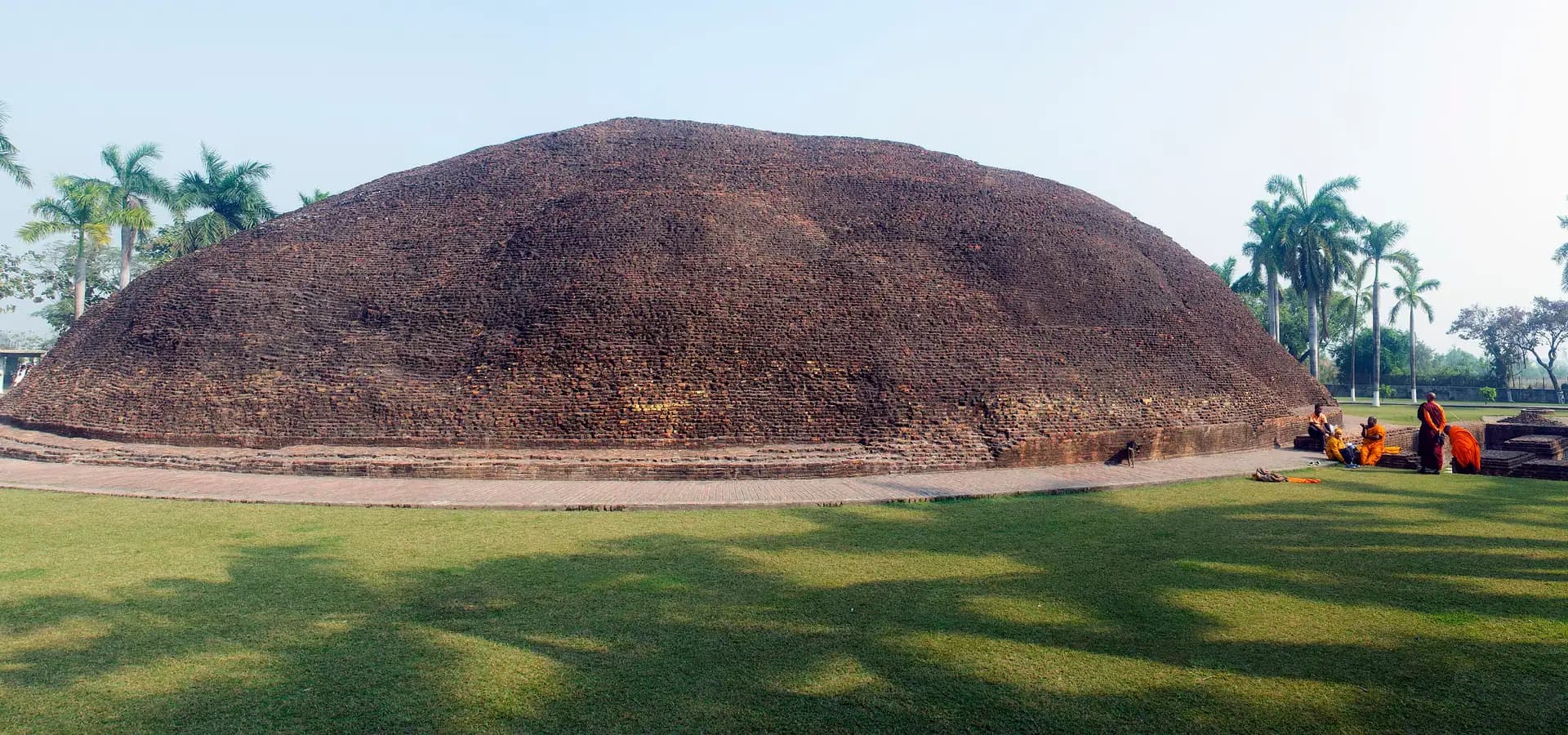
The huge rounded brick Ramabhar Stupa on a green lawn under a pale sky, ringed by palm trees in Kushinagar

Buses on the Gorakhpur road roll through Hata on their way to Kushinagar, the town where the Buddha is believed to have died. Old pilgrim routes crossed this flat country long before the highway, and here the past sits close enough to visit before lunch. A short ride east, pilgrims lay yellow cloth over a reclining Buddha, and a huge brick stupa marks the place of his cremation.

Back in town, Hata keeps busy as a market for wholesalers, vendors and the villages around it, and Bhojpuri carries across the counters. Summers are hot, the monsoon soaks June to September, and winters turn mild and dry. A Local Friend walks beside you through the market lanes and around the stupa.

Neighborhoods to wander

  • Hata market

    The town center, where wholesalers, vendors and retailers serve the villages around Hata.

  • Kushinagar

    The Buddhist town to the east, with stupas, ruins and temples built by many countries.

  • Kaptanganj

    A busy market town about 23 km away, also a tehsil seat of Kushinagar district.

Through the year

  • Chhath Puja

    October or November

    Families make thekua and gather at ponds and riverbanks to offer prayers to the sun.

Say it like a local

Koi naa

Bhojpuri for 'no problem' or 'you're welcome', the easy reply to a thank you.

Questions about Hata

What travelers ask most before a trip to Hata.

  • 1.

    When is the best time to visit Hata?

    October to March is the best time to visit Hata. The monsoon is over, days are dry and mild, and walking around the Kushinagar ruins is comfortable. Summers are very hot, often above 40°C, and June to September brings most of the rain and muddy village roads.

  • 2.

    How many days do you need in Hata?

    One day is enough for most visitors. Spend the morning in the town market, then ride east to Kushinagar for the reclining Buddha, Ramabhar Stupa and Matha Kuar Shrine. Add a second day if you want the international temples, the museum and an easy evening in Gorakhpur.

  • 3.

    How far is Hata from Kushinagar?

    Hata is about 15 km from Kushinagar in a straight line, a short drive east by road. That makes the town a practical base for the Buddhist sites. Kushinagar holds the Mahaparinirvana Temple, Ramabhar Stupa and Matha Kuar Shrine, all close together and easy to walk between.

  • 4.

    Where did the Buddha give his last sermon?

    Tradition places the Buddha’s last sermon at the Matha Kuar Shrine in Kushinagar, near Hata. It stands a short walk south-west of the Mahaparinirvana Temple, where he is believed to have died. A seated Buddha statue found in 1876 sits in a small white shrine at the site.

Population
About 11,000Town (nagar palika), 2011 census as given by Wikipedia.
Climate
Humid subtropicalHot summers, a June to September monsoon, mild dry winters.
Buddha's last stop
Kushinagar, about 15 kmThe town where the Buddha is believed to have reached parinirvana.
Did you know?
The Buddha's last mealTradition places it at Pawa, linked with nearby Fazilnagar.
Known for
Its wholesale marketThe main trading stop for vendors and retailers in the area.
On the street
Bhojpuri and HindiBhojpuri is the everyday language across eastern Uttar Pradesh.
Main airport
Gorakhpur Airport (GOP)About 30 km west, toward Gorakhpur; taxis and buses run the road.
Elevation
About 80 mFlat Gangetic plain, so walks and rides stay level.
Area
About 3.2 km²Town area as listed in Wikidata.
Time zone
IST, UTC+5:30India Standard Time all year; India does not use daylight saving.
From the capital
About 675 km from New DelhiUsually an overnight train to Gorakhpur, then the road east.

More cities in India

Jaipur's pink old city and the seafront of Mumbai open the door to more of India with a Local Friend.

  • Delhi

    3 Local Gurus3 Local Friends
  • Bengaluru

    2 Local Gurus1 Local Friend
  • New Delhi

    2 Local Gurus1 Local Friend
  • Ahmedabad

    0 Local Gurus2 Local Friends
  • Hyderabad

    1 Local Guru1 Local Friend

Nearby cities

  • Gorakhpur 52 km
  • Bettiah 76 km
  • Azamgarh 94 km
  • Basti 96 km
  • Ballia 110 km
  • Jaunpur 149 km
See all 28 cities in India
  1. Global Community
  2. /Asia
  3. /India
  4. /Hata

Hata

Tips & Traps in Hata

No one has shared a tip or a trap about Hata yet. Know a great spot, or something to avoid? Be the first.

Share the first tip

Good to know about Hata

Practical facts to plan your days, and the stories behind the experiences travelers search for the most.

Last reviewed October 2026

Quick facts

Best time to visit
October to MarchDry, mild months after the monsoon; summers can pass 40°C.
How long to stay
1 dayThe market in the morning, the Kushinagar stupas in the afternoon.
Getting around
Buses and autosRoad links run to Gorakhpur and Kushinagar; trains stop at Gauri Bazar.
Taste like a local
ThekuaA crisp wheat and jaggery cookie, pressed in a wooden mold for Chhath.
Before you go
Monsoon June to SeptemberMost of the year’s rain falls in these months.

Curiosities behind the most-searched experiences

  • Ramabhar Stupa

    The giant brick mound said to mark the Buddha's cremation waited underground until a dig in 1910. Buddhist texts call it Makutabandhana Chaitya, which is a lot of name for a very calm lawn.

    Landmarks & Local History

Join us Become a Local Friend in Hata

There are no Local Friends in Hata yet, and that is where you come in.
Earn money showing off your favorite local spots and create unique experiences.
Join our community and be the first to show travelers the Hata beyond the postcard.

Join our community
  • Reclining Buddha statue

    The 6.1 m Buddha is carved from a single block of sandstone and lies on its right side, facing west. Pilgrims drape it in long yellow cloths, so it is rarely without a fresh blanket.

    Culture & Local Events
  • Banana fibre crafts

    Kushinagar district chose banana fibre as its One District One Product, so the stems left after harvest turn into bags, caps, purses, doormats and slippers.

    Local Shopping
  • Matha Kuar Shrine

    In 1837 a visitor took these ruins for the fort of a deity called Mata Koonr, and the name stuck. Today the shrine is linked with the Buddha’s last sermon and holds a seated Buddha of blue stone.

    Landmarks & Local History
  • Relic Distribution Site

    Tradition says a Brahmin named Drona split the Buddha's ashes into eight shares here to settle a quarrel among clans and kings. A small shrine marks the spot, a fair share of history for one lane.

    Culture & Local Events
  • Kushinagar temples

    Buddhist countries have built their own temples around the old ruins, so one short walk passes Chinese, Sri Lankan, Japanese and Thai styles, like a small atlas in stone.

    Art, Photography & Writing
    • Matha Kuar Shrine

      In 1837 a visitor took these ruins for the fort of a deity called Mata Koonr, and the name stuck. Today the shrine is linked with the Buddha’s last sermon and holds a seated Buddha of blue stone.

      Landmarks & Local History
    • Relic Distribution Site

      Tradition says a Brahmin named Drona split the Buddha's ashes into eight shares here to settle a quarrel among clans and kings. A small shrine marks the spot, a fair share of history for one lane.

      Culture & Local Events
    • Kushinagar temples

      Buddhist countries have built their own temples around the old ruins, so one short walk passes Chinese, Sri Lankan, Japanese and Thai styles, like a small atlas in stone.

      Art, Photography & Writing