
HomeGlobal CommunityTips & Traps City Guides
Login
Rent a Local Friend © 2026 - All rights reserved.
  • About us
  • RALF Manifesto
  • Our FAQ
  • Terms
  • Privacy
  • Need help? Contact us!
0Local Gurus
0Local Friends
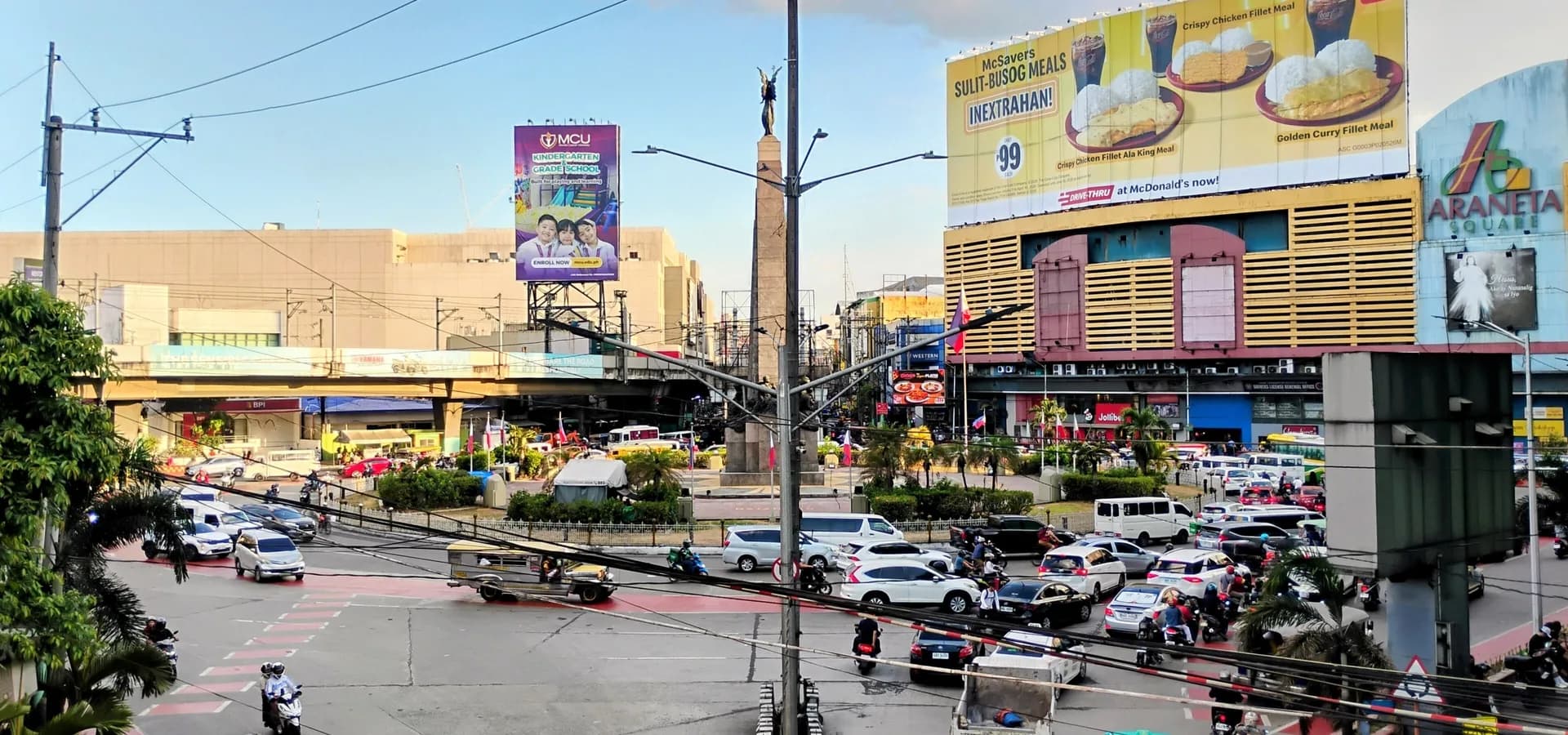
Traffic circling Monumento in Caloocan, the Bonifacio Monument obelisk rising among malls under a blue sky

Jeepney signboards read Monumento, and many rides end at a granite obelisk where bronze revolutionaries crowd around Andrés Bonifacio. The LRT stops a few steps away, and each November wreaths pile up at its base. Secret meetings that sparked the revolution against Spain were held in houses nearby, and the streets still carry that story.

Beyond the roundabout, Grace Park lines its numbered avenues with motorcycle shops, La Loma Cemetery keeps a restored Spanish-era chapel, and a plate of pancit Malabon waits a short ride west. December to April is dry and easy for walking, while wet months bring heavy afternoon rain. A Local Friend walks at your side, matching your steps and pointing out the history in plain sight.

Join us Become a Local Friend in Caloocan

There are no Local Friends in Caloocan yet, and that is where you come in.
Earn money showing off your favorite local spots and create unique experiences.
Join our community and be the first to show travelers the Caloocan beyond the postcard.

Join our community

Neighborhoods to wander

  • Monumento

    The busy hub around the roundabout, with malls, LRT trains and jeepneys going all over.

  • Grace Park

    A grid of numbered avenues where motorcycle shops, schools and family homes share blocks.

  • Sangandaan

    An older corner near the Poblacion with a railway station, a small mall and a plaza.

  • North Caloocan

    Wide suburban subdivisions and markets around Camarin, far from the busy southern streets.

Through the year

  • Caloocan City Day

    February

    The cityhood anniversary on February 16 opens a month of parades, fairs and awards.

  • Bonifacio Day at Monumento

    November 30

    Flag raising and wreath laying at the Bonifacio Monument on the hero's birthday.

Say it like a local

Monumento

What jeepney signs and riders call the whole district around the Bonifacio Monument.

Questions about Caloocan

What travelers ask most before a trip to Caloocan.

  • 1.

    When is the best time to visit Caloocan?

    December to April is the best time, when Metro Manila is in its dry season and walking around Monumento and Grace Park is easiest. March and April are the hottest months. From June to October heavy rain and typhoons are common, and afternoon downpours can slow traffic across the city.

  • 2.

    How many days do you need in Caloocan?

    One day covers the main sights. Start at the Bonifacio Monument, walk through Grace Park and its motorcycle shops on 10th Avenue, and visit the chapel at La Loma Cemetery. Add a second day for the fish port in Navotas and pancit in Malabon, or combine Caloocan with Manila.

  • 3.

    Is Caloocan the same as Kalookan?

    Yes, Caloocan and Kalookan are two spellings of the same city. Kalookan follows Filipino spelling and was pushed by local resolutions in the 1970s and 1980s, but the city charter uses Caloocan, which appears on the official logo. The local Catholic diocese still uses the name Kalookan.

  • 4.

    Why is Caloocan split into two parts?

    Caloocan is split because land between its halves went to Quezon City. When the new capital was created in 1939 and expanded in 1949, it took Balintawak, La Loma and Novaliches districts. Urban South Caloocan and suburban North Caloocan now sit about 1.7 km apart at their closest points.

Population
1.7 millionCity proper, 2024 national census; fourth-largest city in the country.
Founded
1815Split from Tondo as a town; chartered as a city in 1962.
Climate
Tropical savannaDry from November to April; rains peak from June to October.
A city in two pieces
North and South CaloocanQuezon City land keeps the halves apart, about 1.7 km at the closest.
Did you know?
Revolution's first battleMonumento marks the Katipunan's first armed clash with Spain, 1896.
Known as
Katipunan countryBonifacio held secret meetings here before the 1896 revolt.
On the street
Filipino, EnglishTagalog-based Filipino at home and on jeepneys; English in schools.
Main airport
Ninoy Aquino Intl (MNL)About 17 km south; taxis and ride-hailing, often via the Skyway.
Elevation
About 6 mFlat lowland near the bay; the highest point, by NLEX, is about 35 m.
Area
53.33 km²Both halves combined, per Wikipedia; Wikidata lists 55.8 km².
Time zone
PHT, UTC+8Philippine Time all year; the country does not use daylight saving.
From the capital
About 5 km from ManilaShares a border; about 40 min to central Manila by car.
Born here
Gregoria de JesúsLakambini of the Katipunan, keeper of its seal and papers.

More cities in Philippines

Island-hop between Cebu and the lagoons of Palawan and discover more of the Philippines with a Local Friend.

  • Bacolod

    0 Local Gurus1 Local Friend
  • Manila

    1 Local Guru0 Local Friends
  • Muntinlupa

    0 Local Gurus1 Local Friend
  • Province of Cavite

    1 Local Guru0 Local Friends
  • Taguig

    0 Local Gurus1 Local Friend

Nearby cities

  • Las Piñas 22 km
  • Cabuyao 45 km
  • Province of Laguna 67 km
  • Angeles City 69 km
  • Batangas 100 km
  • Cavite 116 km
See all 5 cities in Philippines
  1. Global Community
  2. /Asia
  3. /Philippines
  4. /Caloocan

Caloocan

Tips & Traps in Caloocan

Insider advice from Local Friends in Caloocan: what to do, and what to avoid.

Baguio bus at Monumento: pick the right Victory Liner stop
Trap
Miscellaneous

Baguio bus at Monumento: pick the right Victory Liner stop

Caloocan, Philippines

Monumento doubles as a gateway north: Victory Liner, First North Luzon Transit and RJ Express have terminals right outside the LRT-1 station. Victory Liner also runs terminals in Cubao, Pasay and Sampaloc, and its Caloocan to Baguio schedule listed in 2026 has departures from…

EDSA Carousel from Monumento: carry cash as a backup
Trap
Getting Around

EDSA Carousel from Monumento: carry cash as a backup

Caloocan, Philippines

Monumento is the northern end of the EDSA Carousel, the bus-only lane to PITX that runs around the clock, with longer waits after midnight. Payment rules have shifted: reports from 2025 and 2026 mention cash and GCash QR codes from the conductor, and one rider was refused GCash…

Bonifacio Day: Monumento's roads close overnight
Trap
Getting Around

Bonifacio Day: Monumento's roads close overnight

Caloocan, Philippines

Around November 30 the roads feeding Monumento Circle are closed to traffic, including stretches of EDSA, Samson Road, Rizal Avenue and MacArthur Highway. In 2024 the closures began late on November 29 and lasted until late morning, with detours via 10th Avenue and A. Mabini…

San Roque fiesta at Caloocan Cathedral, every August 16
Tip
Events

San Roque fiesta at Caloocan Cathedral, every August 16

Caloocan, Philippines

The cathedral parish keeps its fiesta on August 16, the feast of San Roque, the saint invoked against sickness and plague. The cathedral also honors Nuestra Señora de Nieva, called Queen and Mother of Caloocan. Go to the corner of 10th Avenue and A. Mabini Street and read the…

Caloocan Cathedral: the church with a 2022 heritage marker
Tip
Art & Culture

Caloocan Cathedral: the church with a 2022 heritage marker

Caloocan, Philippines

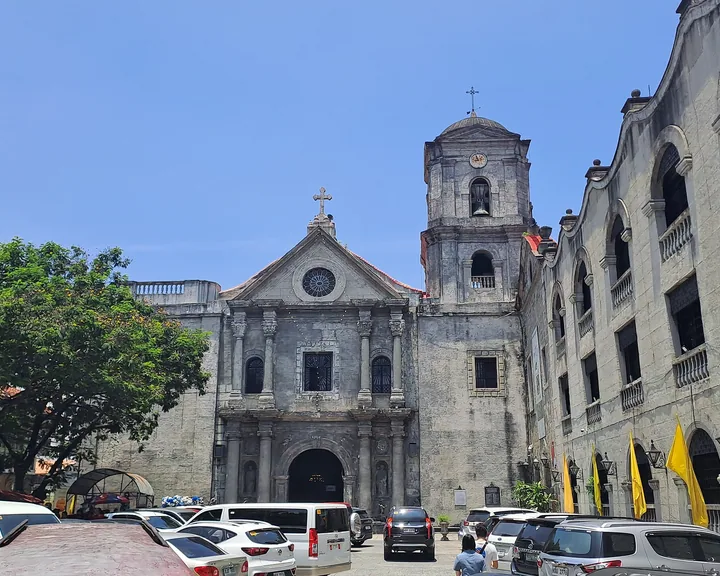
San Roque Cathedral stands at the corner of 10th Avenue and A. Mabini Street in the old Poblacion. The big church was built between 1819 and 1847, was partly destroyed in 1899 during the Philippine-American War and was rebuilt in 1914. Look for the black-and-white aisle tiles…

See all 5 Tips & Traps in Caloocan

Good to know about Caloocan

Practical facts to plan your days, and the stories behind the experiences travelers search for the most.

Last reviewed October 2026

Quick facts

Best time to visit
December to AprilThe dry months; the heaviest rains fall from June to October.
How long to stay
1 dayEnough for Monumento, Grace Park, La Loma and a Malabon noodle stop.
Getting around
LRT-1, jeepneys, tricyclesLRT-1 stops at Monumento and 5th Avenue; jeepneys reach the north.
Taste like a local
Pancit MalabonThick rice noodles in a shrimp and annatto sauce, topped with seafood.
Before you go
eTravel registrationFree online arrival form for the Philippines, open 72 hours ahead.

Curiosities behind the most-searched experiences

  • Bonifacio Monument

    Guillermo Tolentino's obelisk was unveiled in 1933, with a winged figure on top and bronze revolutionaries at its base. It took over the map so completely that the district and its LRT station simply answer to Monumento.

    Landmarks & Local History
  • 10th Avenue motorcycle row

    Grace Park's 10th Avenue is lined with motorcycle dealers and spare parts counters. Riders from across the metro come hunting for one small missing part and leave with a new seat cover too.

    Local Shopping
  • Navotas Fish Port

    Next door in Navotas, the country's biggest fish port trades much of Metro Manila's seafood through the night. Prices are set by bulungan, a whispered auction where the loudest thing is the ice.

    Gastronomy
  • La Loma Cemetery

    Opened in 1884, mostly on Caloocan land, it is one of Manila's oldest cemeteries. Its Spanish-era chapel, a National Cultural Treasure, took craftspeople 11 months to restore stone by stone.

    Landmarks & Local History
  • Grace Park airfield

    Before the numbered avenues filled with homes and shops, Grace Park was a prewar airfield, and planes left from here for Baguio. Today the loudest engines on the old runway belong to motorcycles.

    Culture & Local Events
  • Pancit Malabon

    One story says workers riding the old Malabon tranvia dreamed up this orange noodle dish as a local answer to Spanish paella. The seafood piled on top makes the comparison easy to believe.

    Gastronomy