

HomeGlobal CommunityTips & Traps City Guides
Login
Rent a Local Friend © 2026 - All rights reserved.
  • About us
  • RALF Manifesto
  • Our FAQ
  • Terms
  • Privacy
  • Need help? Contact us!
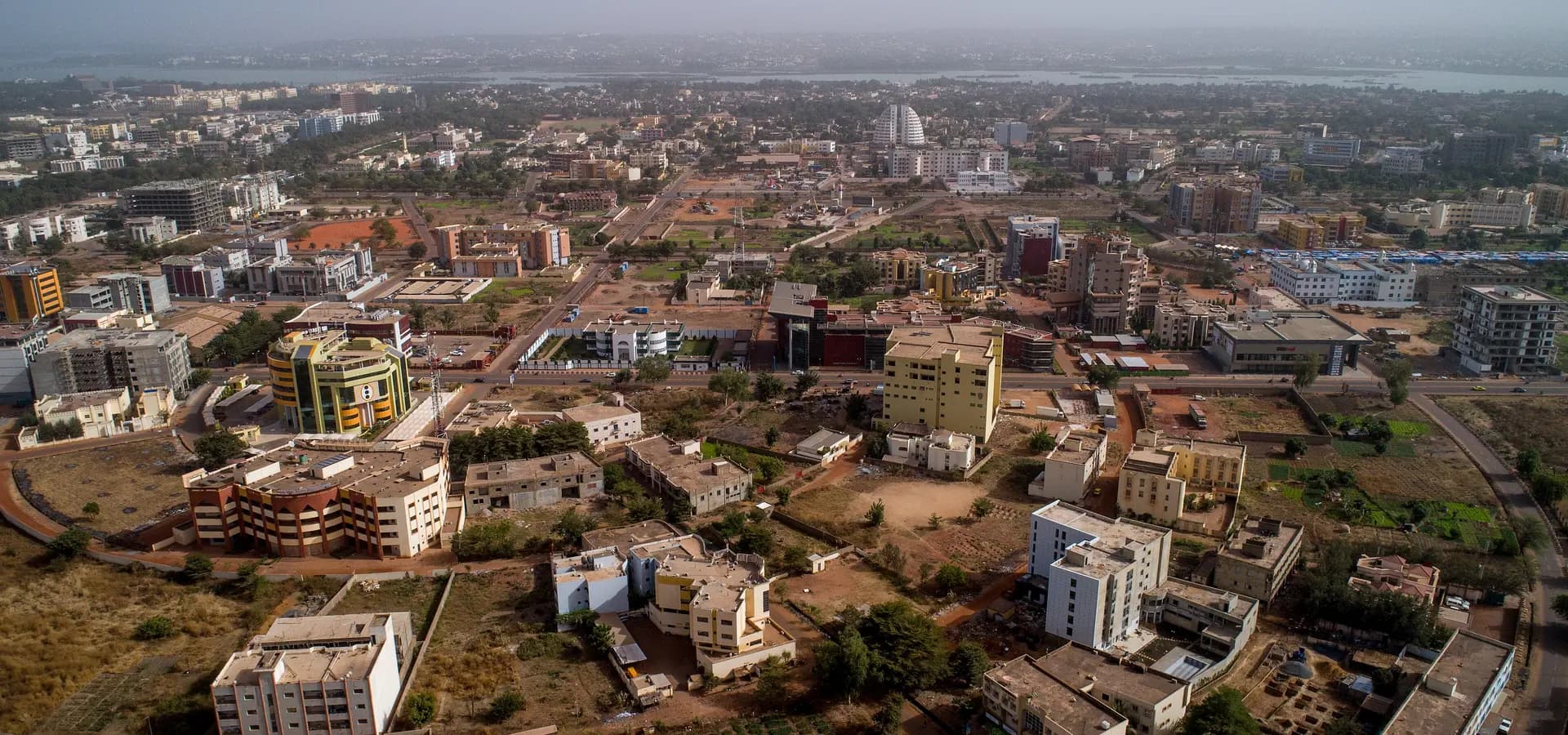
Aerial view of Bamako's ACI 2000 district, low buildings and green plots stretching to the Niger River
  1. Global Community
  2. /Africa
  3. /Mali
  4. /Bamako

Bamako

In the days before Tabaski, sheep wait tethered along residential streets and tailors work late on stiff, shining bazin. Every other year the city gathers again for the Bamako Encounters, when photographs from across Africa fill museums and cultural centers. These are the weeks when the capital dresses up and goes out.

Between celebrations, life follows the Niger River, crossed by long bridges to Badalabougou, where freshly dyed cloth dries on fences. Late evenings in Hippodrome belong to music. The climate is tropical savanna, with rains from June to October and the mildest, driest days from November to February. A Local Friend can take you through doors you would never have tried, into a dyer's courtyard or a family celebration.

Population
4.2 millionDistrict of Bamako, 2022 national census.
Founded
17th centuryBegun around 1650 by the Niaré family as a small chiefdom.
Climate
Tropical savannaRains June to October; hottest March to May; mildest Nov to Feb.
Crossing the Niger
3 bridges and a causewayThe stone Sotuba causeway, built on rapids, floods July to January.
Did you know?
First African photo biennialThe Bamako Encounters have filled the city with photos since 1994.
Known for
Griot musicA music scene that drew Ry Cooder and Robert Plant here to jam.
On the street
Bambara and FrenchBambara is spoken by about two-thirds of residents; French in offices.
Main airport
Modibo Keita Intl (BKO)About 15 km south of the center; taxis wait outside arrivals.
Elevation
374 mMeasured on the Niger floodplain; the Point G escarpment rises north.
Area
245 km²District of Bamako, the sum of its six communes.
Time zone
GMT, UTC+0Greenwich Mean Time all year; Mali does not use daylight saving.
Capital since
1908Capital of French Sudan from 1908, then of independent Mali in 1960.
Born here
Seydou KeïtaOften called the most famous African studio photographer of his era.

Good to know about Bamako

Practical facts to plan your days, and the stories behind the experiences travelers search for the most.

Last reviewed October 2026

Quick facts

Best time to visit
November to FebruaryThe driest and mildest months; March to May is the hottest stretch.
How long to stay
2 to 3 daysCovers the museum, the markets, the riverfront and a night of live music.
Getting around
Taxis and SotramasGreen shared Sotrama minibuses run set routes without timetables.
Taste like a local
TigadegenaPeanut stew with meat, served with rice; often called the national dish.
Before you go
Cash in CFA francsMali uses the West African CFA franc; taxis and minibuses run on cash.

Curiosities behind the most-searched experiences

  • National Museum of Mali

    It opened in 1953 as the Sudanese Museum, and about half of its early finds were gathered by Ukrainian archaeologist Yuriy Shumovskyi. Its later home borrows traditional Malian forms, so even the walls are on show.

    Landmarks & Local History
  • Bazin dyeing

    Plain damask arrives from Germany, the Netherlands or China, and Bamako's dyers knot it, dip it and starch it until it gleams. In Badalabougou the finished lengths dry on fences, often the neighbors'.

    Local Shopping
  • Live music in Hippodrome

    The 1990s music boom led by Salif Keita and Ali Farka Touré drew producers and hopeful players to Bamako. In Hippodrome the sets in open-air maquis tend to start after ten, so dinner is only the warm-up.

    Culture & Local Events
  • Grand Marché

    Commune III holds the capital's two biggest markets, the Grand Marché and Dibida. Nearby Marché Rose stacks instruments, blankets and bazin riche in a maze of stalls that seems to have no last row.

    Local Shopping
  • Point G rock paintings

    The hill of Point G above the city holds caves with ancient rock paintings, and since the early 1900s it has also held a hospital. Few hilltops keep prehistoric art and a ward round within walking distance.

    Landmarks & Local History
  • Sotrama minibuses

    Bamako's green Sotrama minibuses follow fixed routes that are written down nowhere. Young apprentices lean out of the door calling the stops, so every ride doubles as a lesson in neighborhood names.

    Culture & Local Events

Neighborhoods to wander

  • Hippodrome

    Embassies by day, then maquis, bars and live sets that often start after ten.

  • Badalabougou

    South-bank streets of restaurants and bazin dyers, just across the bridges from downtown.

  • ACI 2000

    A business district laid out on old airport runways, with banks, hotels and wide avenues.

Through the year

  • Bamako Encounters

    Biennial, November to January

    Africa's photography biennial spreads across the National Museum and other city venues.

Say it like a local

I ni ce

All-purpose Bambara hello, and a thank-you too. Men answer nba, women answer nse.

Questions about Bamako

What travelers ask most before a trip to Bamako.

  • 1.

    When is the best time to visit Bamako?

    November to February is the most comfortable time, with dry weather and the mildest temperatures of the year. March to May is the hottest stretch, and the rainy season runs from June to October. Every other year, the Bamako Encounters photography biennial adds a reason to come between late November and January.

  • 2.

    How many days do you need in Bamako?

    Two to three days covers the main sights. Spend a morning at the National Museum of Mali, an afternoon in the Grand Marché and the streets around it, and an evening of live music in Hippodrome. Add a day for the bazin dyers of Badalabougou and a look at the Niger from the bridges.

  • 3.

    What language do people speak in Bamako?

    Bambara is the everyday language of Bamako, spoken by about two-thirds of residents and understood by many more as a second language. French is common in offices, schools, signs and newspapers. Greetings matter here, and the all-purpose Bambara hello, I ni ce, opens most conversations in markets and shops.

  • 4.

    What does the name Bamako mean?

    The name is usually translated from Bambara as crocodile river. Some sources prefer crocodile's back or crocodile backwater instead. Crocodiles still appear on the city's emblem, where three of them are said to stand for the small streams, or marigots, that once ran through the town.

0Local Gurus
0Local Friends

Join us Become a Local Friend in Bamako

There are no Local Friends in Bamako yet, and that is where you come in.
Earn money showing off your favorite local spots and create unique experiences.
Join our community and be the first to show travelers the Bamako beyond the postcard.

Join our community

Tips & Traps in Bamako

Insider advice from Local Friends in Bamako: what to do, and what to avoid.

Plan your meals and days around Ramadan
Trap
Miscellaneous

Plan your meals and days around Ramadan

Bamako, Mali
Ask before you photograph in Bamako
Trap
Photography & Views

Ask before you photograph in Bamako

Bamako, Mali
Agree the taxi fare before you get in
Trap
Getting Around

Agree the taxi fare before you get in

Bamako, Mali
Ogobagna, the January week of Dogon culture in Bamako
Tip
Events

Ogobagna, the January week of Dogon culture in Bamako

Bamako, Mali
Watch crafts being made at the Maison des Artisans
Tip
Shop

Watch crafts being made at the Maison des Artisans

Bamako, Mali
Day hike to the Kamadjan arch and waterfalls at Siby
Tip
Sport & Outdoors

Day hike to the Kamadjan arch and waterfalls at Siby

Bamako, Mali
Walk, jog or cycle in the National Park of Mali
Tip
Sport & Outdoors

Walk, jog or cycle in the National Park of Mali

Bamako, Mali
See all 7 Tips & Traps in Bamako

More cities in Mali

Watch the Niger River flow past Bamako and keep discovering Mali with a Local Friend.

  • Sikasso

    0 Local Gurus0 Local Friends
  • Koutiala

    0 Local Gurus0 Local Friends
  • Ségou

    0 Local Gurus0 Local Friends
  • Kayes

    0 Local Gurus0 Local Friends
  • Mopti

    0 Local Gurus0 Local Friends

During Ramadan Bamako slows down by day. Restaurant traffic drops by more than half and some owners close for the month, and eating, drinking or smoking in public in daylight can cause offence. Plan daytime meals ahead, eat discreetly at your hotel or at a place that clearly…

Bamako is photogenic, but some subjects need care. Government buildings, uniformed officials, embassies and the airport are best left out of your frame, and many people expect to be asked before they appear in a picture, especially women, children and religious leaders. Ask…

Taxis in Bamako rarely run a meter you can count on, so the fare is whatever you settle before the car moves. Say your destination clearly, agree the price first and ask your hotel or a local contact what is fair for that trip. Quality varies from driver to driver, so look at…

Ogobagna is a week-long festival of Dogon culture that usually takes place in January on the Place du Cinquantenaire. Expect mask dances by Dogon and Bozo troupes, talks, and a temporary village with a replica of the Toguna meeting shelter. Each edition can give a guest…

The Maison des Artisans goes back to 1932 and is a craft centre where you can watch leatherworkers, jewelers, wood sculptors and weavers at work. Look for ebony statues, djembe and balafon, and bogolan mud-dyed cloth. Bargaining is expected, so negotiate firmly but respectfully…

Siby sits about 50 km southwest of Bamako, roughly an hour by road, and is the classic day out for rocks, caves and waterfalls. Climb to the natural Kamadjan arch for a panorama and its legend tied to a companion of Sundiata Keita, then cool off at a waterfall. Hire a local…

The National Park of Mali covers 103 hectares in a canyon under the Koulouba plateau, next to the National Museum. It has jogging, fitness and cycling tracks, a botanical garden with a medicinal plants area and play spaces for children. Go early in the morning or late in the…

See all 47 cities in Mali