

HomeGlobal CommunityTips & Traps City Guides
Login
Rent a Local Friend © 2026 - All rights reserved.
  • About us
  • RALF Manifesto
  • Our FAQ
  • Terms
  • Privacy
  • Need help? Contact us!
0Local Gurus
0Local Friends
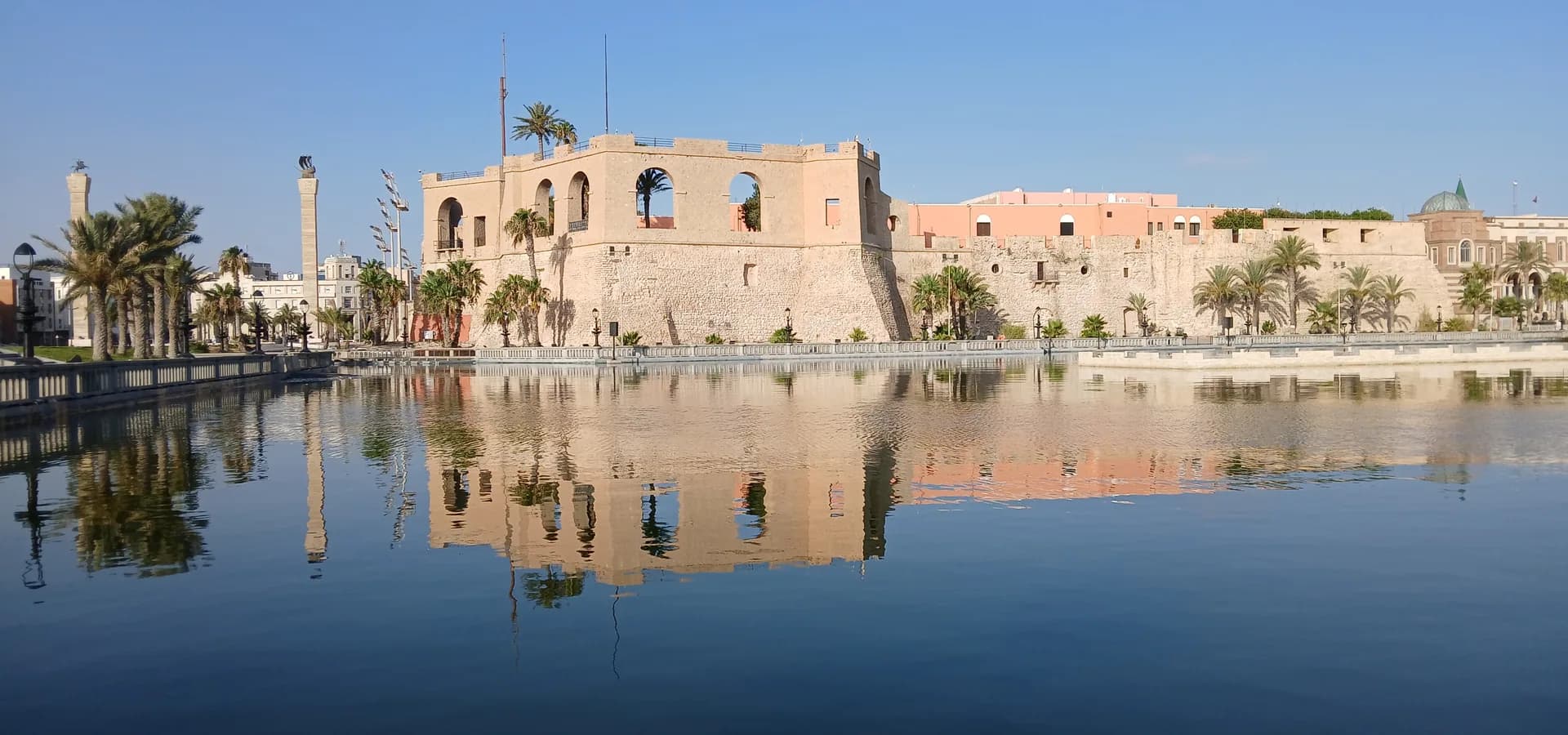
The sand-colored Red Castle of Tripoli and its palm trees mirrored in calm water under a clear blue sky
  1. Global Community
  2. /Africa
  3. /Libya
  4. /Tripoli

Tripoli

Wide blue water fills the bay below the Red Castle, whose sand-colored walls catch the morning light. A few steps inland the view shrinks to small things, like brass trays polished by hand in the old souks and Roman columns set into the walls of later buildings.

Past the Arch of Marcus Aurelius, the city stretches west to Gargaresh, where cafés line the long road near the sea. Summers are hot and dry, while winters bring mild days and most of the year's rain. A Local Friend can lead you to a favorite corner of the Old City and tell you the story that makes it theirs.


Population
1.3 millionCity proper, 2020 estimate; the wider metro area is much larger.
Founded
7th century BCBegan as a Phoenician harbor, later the Greek and Roman town of Oea.
Climate
Hot semi-aridLong, hot, dry summers; mild winters bring most of the rain.
Roman arch downtown
Built AD 163The Arch of Marcus Aurelius, the only Roman monument still standing.
Did you know?
Africa's oldest trade fairThe Tripoli International Fair has been held since 1927.
Known as
Bride of the SeaArus al-Bahr, for its whitewashed buildings and turquoise bay.
On the street
Libyan Arabic, EnglishThe western Libyan dialect; many educated locals speak English.
Main airport
Mitiga Intl (MJI)About 8 km east of the center; taxis are the usual way in.
Elevation
About 15 mLow coastal ground; the Old City sits right on the bay.
Area
About 1,507 km²Greater Tripoli area; published figures vary with the boundary used.
Time zone
EET, UTC+2Eastern European Time all year; Libya does not use daylight saving.
Capital since
1951Since independence; it shared the role with Benghazi until 1963.
Born here
Claudio GentileJuventus defender who won the 1982 World Cup with Italy.

Join us Become a Local Friend in Tripoli

There are no Local Friends in Tripoli yet, and that is where you come in.
Earn money showing off your favorite local spots and create unique experiences.
Join our community and be the first to show travelers the Tripoli beyond the postcard.

Join our community

Good to know about Tripoli

Practical facts to plan your days, and the stories behind the experiences travelers search for the most.

Last reviewed October 2026

Quick facts

Best time to visit
March to MaySpring is mild and sunny; October and November are also pleasant.
How long to stay
2 to 3 daysEnough for the Old City, the Red Castle museum and the seafront.
Getting around
Taxis, cars, walkingThere is no passenger rail; the Old City is compact and walkable.
Taste like a local
BazinA dome of barley dough in a spiced lamb stew, eaten by hand.
Before you go
Visa arranged in advanceMost nationalities need a visa issued before arrival.

Curiosities behind the most-searched experiences

  • Souq al-Mushir

    This Ottoman-era market street runs from the old Huwara souk to the clock tower square. Next to it, brass sellers work in Souq al-Gezdara, named after the tin once used to make old trays shine.

    Local Shopping
  • Gurgi Mosque

    Finished in 1834 for naval captain Mustafa Gurgi, the mosque carries a name that means "from Georgia." Its 25-meter minaret has two balconies made of green marble.

    Landmarks & Local History
  • Darghut hammam

    Built in the 17th century beside the Darghut Mosque, this is one of only three notable old bathhouses left in the city, and steam has been rising under its domes for well over three centuries.

    Wellness & Nature
  • Red Castle Museum

    Libya's national museum fills a palace complex of courtyards on the edge of the medina. Its four floors run from the Stone Age to modern times, and the top one is given over to desert and sea life.

    Landmarks & Local History
  • Al-Naqah Mosque

    Its name means "mosque of the she-camel." Legend says the townspeople once offered a camel loaded with riches to a conquering general, who told them to spend it on this mosque instead.

    Landmarks & Local History
  • Old City clock tower

    An Ottoman governor built this 18-meter tower in the 1860s. It still stands over the square locals call Al-Sa'aa, which simply means "the clock."

    Art, Photography & Writing

Neighborhoods to wander

  • Old City (Medina)

    Ottoman lanes, covered souks, mosques and courtyard houses inside old walls by the port.

  • Gargaresh

    A long road west of the center lined with cafés, bistros and clothing shops.

  • Ben Ashour

    Residential streets with boutiques, everyday shops and several embassies.

Through the year

  • Tripoli International Fair

    April

    A trade fair on Omar Mukhtar Avenue with exhibitors from dozens of countries.

Say it like a local

Bahi

Libyan for 'OK' or 'good', used to agree, wrap up a chat or say all is fine.

Questions about Tripoli

What travelers ask most before a trip to Tripoli.

  • 1.

    What is the best time to visit Tripoli?

    Spring, from March to May, is the most comfortable time, with mild, sunny days by the sea. October and November are also pleasant. Summers are long, hot and dry, often humid along the coast, while winters are mild and bring most of the year's rain.

  • 2.

    How many days do you need in Tripoli?

    Two to three days covers the main sights. Spend one day in the Old City with its souks, mosques and the Arch of Marcus Aurelius, then visit the national museum in the Red Castle and walk the seafront. Add time for Roman sites such as Sabratha and Leptis Magna.

  • 3.

    Is Tripoli in Libya the same as Tripoli in Lebanon?

    No, they are two different cities about 2,000 km apart. In Arabic the Libyan capital is often called Tripoli of the West, while the Lebanese port is Tripoli of the Levant. The name comes from Greek for "three cities," after Oea, Sabratha and Leptis Magna.

  • 4.

    What is the Red Castle in Tripoli?

    The Red Castle, or Assaraya al-Hamra, is a large palace complex of courtyards on the edge of the Old City, facing the sea. Parts of its defenses date to the Knights of St. John in the 16th century. Today it houses the Red Castle Museum, Libya's national museum.

More cities in Libya

Tripoli's old medina and the Roman ruins of Leptis Magna open a window onto Libya's long history.

  • Benghazi

    0 Local Gurus0 Local Friends
  • Mişrātah

    0 Local Gurus0 Local Friends
  • Zliten

    0 Local Gurus0 Local Friends
  • Al Khums

    0 Local Gurus0 Local Friends
  • Az Zāwīyah

    0 Local Gurus0 Local Friends
See all 51 cities in Libya

Tips & Traps in Tripoli

Insider advice from Local Friends in Tripoli: what to do, and what to avoid.

Shop the souks for textiles, pottery and silver
Tip
Shop

Shop the souks for textiles, pottery and silver

Tripoli, Libya

Beyond the brass trays on the city page, the Old City souks sell carpets, pottery, textiles and souvenirs, and markets in Libya also carry silver, spices, henna and Tuareg scarves. Handle items, compare a few stalls and ask the seller about origin. Libya has strict rules on…

Photograph the Old City, not security sites
Trap
Photography & Views

Photograph the Old City, not security sites

Tripoli, Libya

Libya has strict rules on photography. Pictures of military or police personnel and installations can bring serious trouble, and permission is needed near military facilities. The Old City lanes, courtyards and seafront are the safer frames, so keep your camera down near…

Let your host handle police registration and exit stamp
Tip
Sleep

Let your host handle police registration and exit stamp

Tripoli, Libya

Short-stay visitors in Libya must register with the police within a week of arriving, and the host company or travel agency usually arranges it. Missing it can mean a fine on departure. Ask your hotel at check-in who handles registration, and confirm before checkout that your…

Do not count on cards: bring cash
Trap
Miscellaneous

Do not count on cards: bring cash

Tripoli, Libya

Libya runs mostly on cash. UK government advice says bank cards cannot be used at banks, ATMs or hotels, and AFP reported in late 2024 that ATMs are few and many shops have no card terminals. Plan your spending in advance, keep small notes for taxis and cafés, and ask your host…

Do not eat or drink in public during Ramadan
Trap
Miscellaneous

Do not eat or drink in public during Ramadan

Tripoli, Libya

During Ramadan, locals avoid eating, drinking, smoking or chewing gum in public in daylight, including in the car. Save snacks for your hotel and expect many cafés to change their hours, so ask staff or your host before planning lunch. Energy dips in the late afternoon, so…

Walk the courtyard of the Karamanly House Museum
Tip
Art & Culture

Walk the courtyard of the Karamanly House Museum

Tripoli, Libya

This restored eighteenth-century merchant house in the Old City has an open courtyard with a central fountain, mosaic-covered walls and rooms furnished with Karamanli-era costumes and furniture. It shows how a wealthy Tripoli family lived, which the mosques and souks cannot. Ask…

Sit for the three rounds of Libyan tea
Tip
Eat & Drink

Sit for the three rounds of Libyan tea

Tripoli, Libya

Libyan tea is served in small glasses in three rounds, brewed without sugar at first so a yellowish foam forms on top. The last round often comes with boiled peanuts or almonds, and some hosts add mint or basil. Accept the cup when it is offered and plan time to sit, since a…

See all 7 Tips & Traps in Tripoli